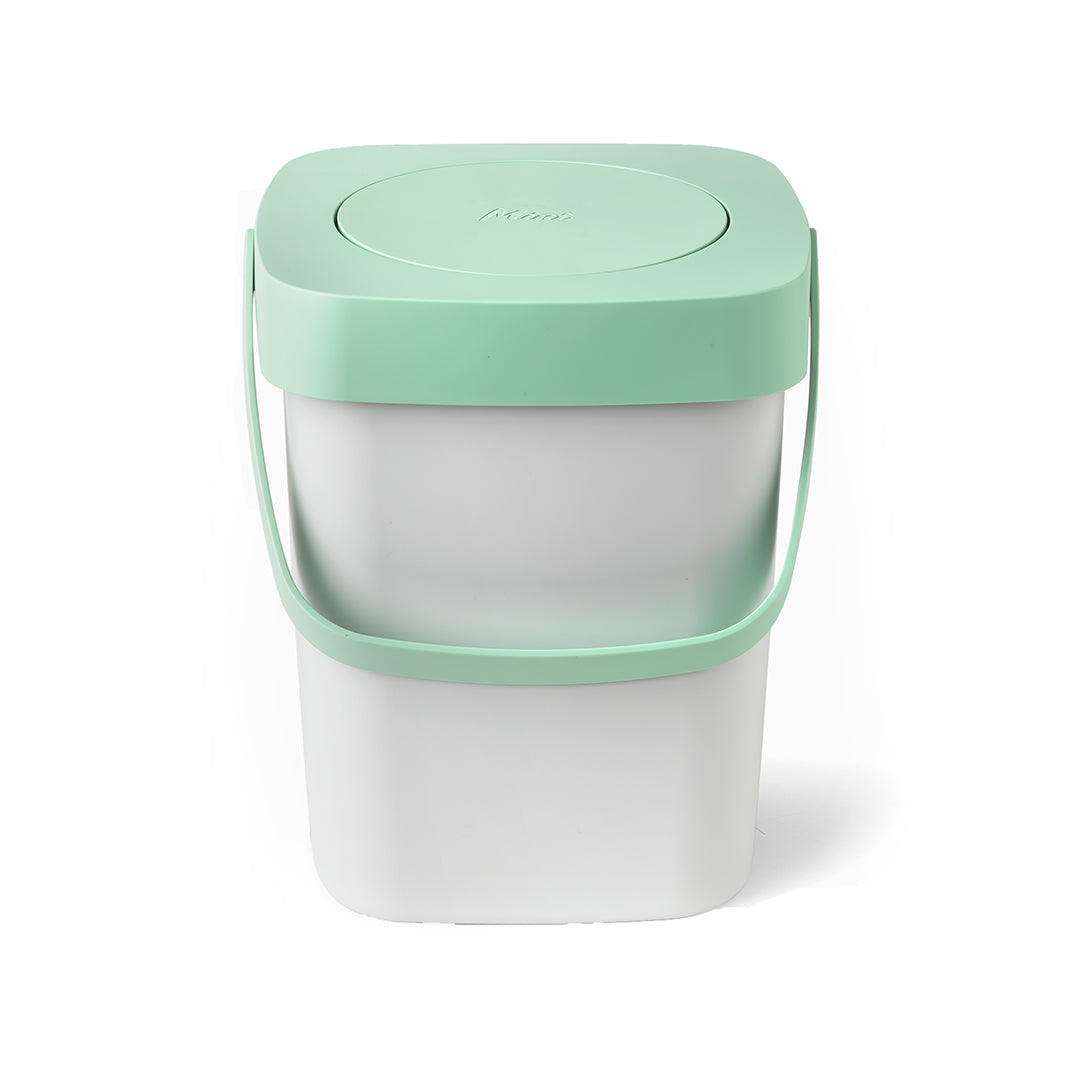

Organic Waste Sorting in Europe: What Changed in 2024?
As of January 1, 2024, Europe has taken another step toward more sustainable waste management by expanding the separate collection of organic waste at the source. The aim is to make it easier for households to sort food waste by providing dedicated collection systems, either through door-to-door collection or community drop-off points, so that this waste can be recovered and reused.
Let's take a closer look at why this change matters and what it means for households.
What Is Organic Waste?
Organic waste, also known as bio-waste, includes biodegradable waste generated by households, businesses, and industry. It mainly consists of:
-
Food waste from households, restaurants, and food retailers.
-
Garden waste such as grass clippings and pruning.
For households, this primarily means food scraps, leftovers, expired food, fruit and vegetable peelings, coffee grounds, and similar organic materials.
Why Sort Organic Waste?
Organic waste still represents a significant share of household waste that is not sorted separately. Diverting it from general waste offers several environmental benefits.
Reducing CO₂ emissions
Organic waste contains around 90% water. When it is disposed of with household waste and sent for incineration, energy is wasted evaporating that water, resulting in avoidable CO₂ emissions.
Producing biogas
When collected separately, organic waste can be processed through anaerobic digestion to produce biogas, a renewable source of energy that can be used locally or injected into the natural gas network.
Creating natural fertilizer
Composted organic waste produces nutrient-rich compost that improves soil quality and supports more sustainable agriculture.
A New Law to Support the Circular Economy
The new regulations form part of Europe's broader commitment to reducing waste and promoting a circular economy.
Rather than focusing only on waste disposal, the objective is to treat organic waste as a valuable resource that can be transformed into renewable energy and natural fertilizer.
Are Households Required to Sort Their Organic Waste?
A common misconception is that the 2024 regulations make organic waste sorting mandatory for every household.
In reality, the rules primarily require local authorities to provide residents with solutions for separating organic waste. The goal is to make sorting accessible and encourage participation, rather than imposing a direct obligation on households.
Organic Waste Is a Resource, Not Just Waste
For centuries, food scraps and organic materials were valued because they enriched agricultural soils. Only in more recent history did they become viewed simply as waste.
Today, organic waste is once again being recognized as a valuable resource that can contribute to renewable energy production and healthier soils.
How Organic Waste Collection Is Being Implemented
Local authorities are gradually introducing separate collection systems to ensure that organic waste can be collected regularly and processed appropriately.
Implementation varies between regions and municipalities, with public information campaigns helping residents understand both the environmental and practical benefits of organic waste sorting.
Different Collection Methods
Depending on where you live, organic waste may be collected through:
-
Separate door-to-door collection.
-
Community collection points.
An Important Step Toward a More Sustainable Future
Separating organic waste at the source is an important step toward reducing waste, lowering greenhouse gas emissions, and recovering valuable resources.
Sorting food waste is a simple everyday action that helps produce renewable energy, create natural compost, and reduce the environmental impact of household waste.
To learn more about organic waste sorting solutions, see our dedicated article.